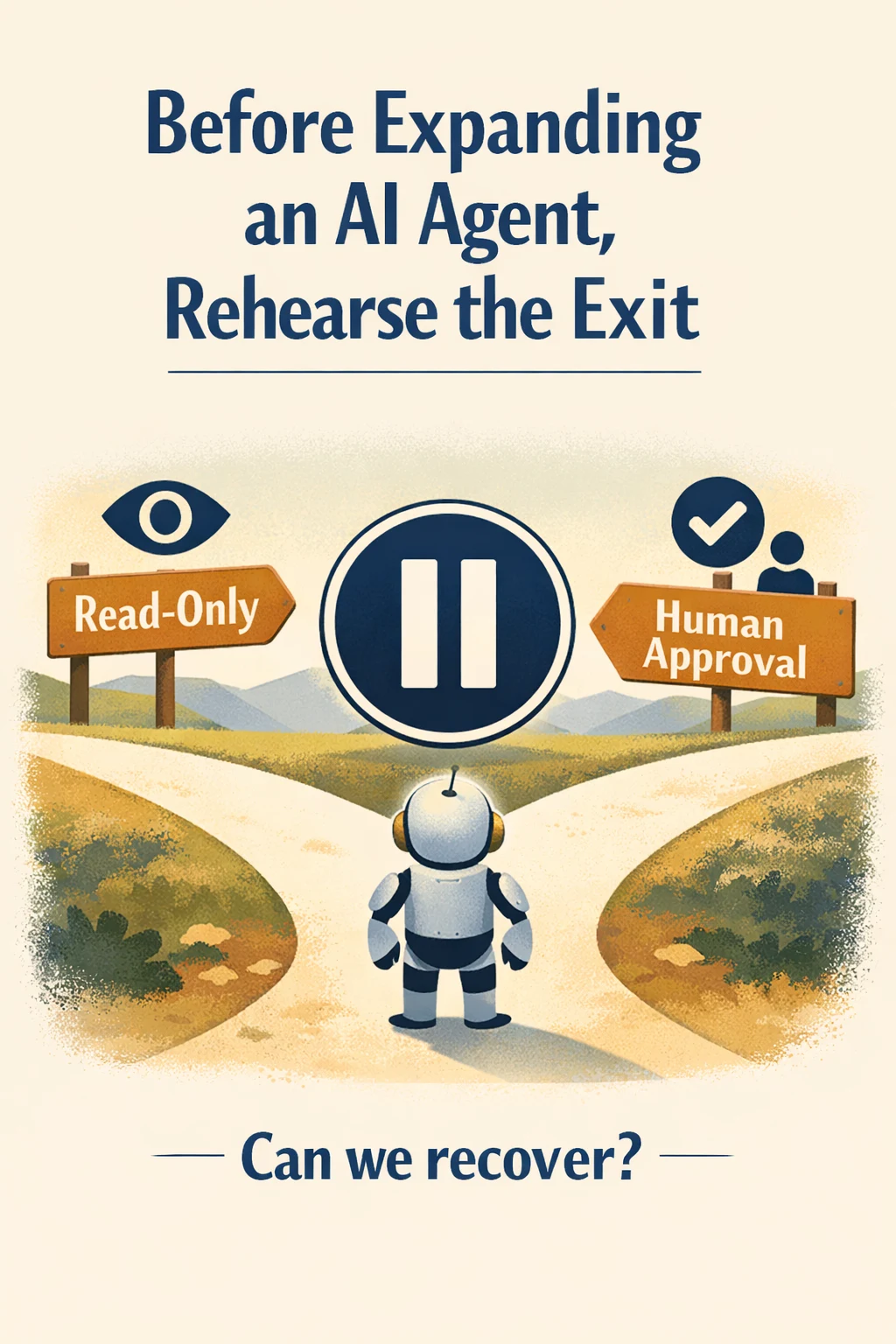
Before Expanding an AI Agent, Rehearse the Exit
1 — Don’t evaluate only the next capability. Ahmad Turki Obaidat’s “Let an AI Agent Earn Its Next Permission” recommends staged access and asks what should remain under human control, and how to pause or reverse the process. Yasmin Muhamad Hamad’s “GPT, Claude or Gemini: the $10M bet is bigger than the model” calls for comparing ecosystems on real tasks, including failure recovery and the effort of maintaining the system. Together, they suggest a useful decision test: can the team recover—not just proceed?
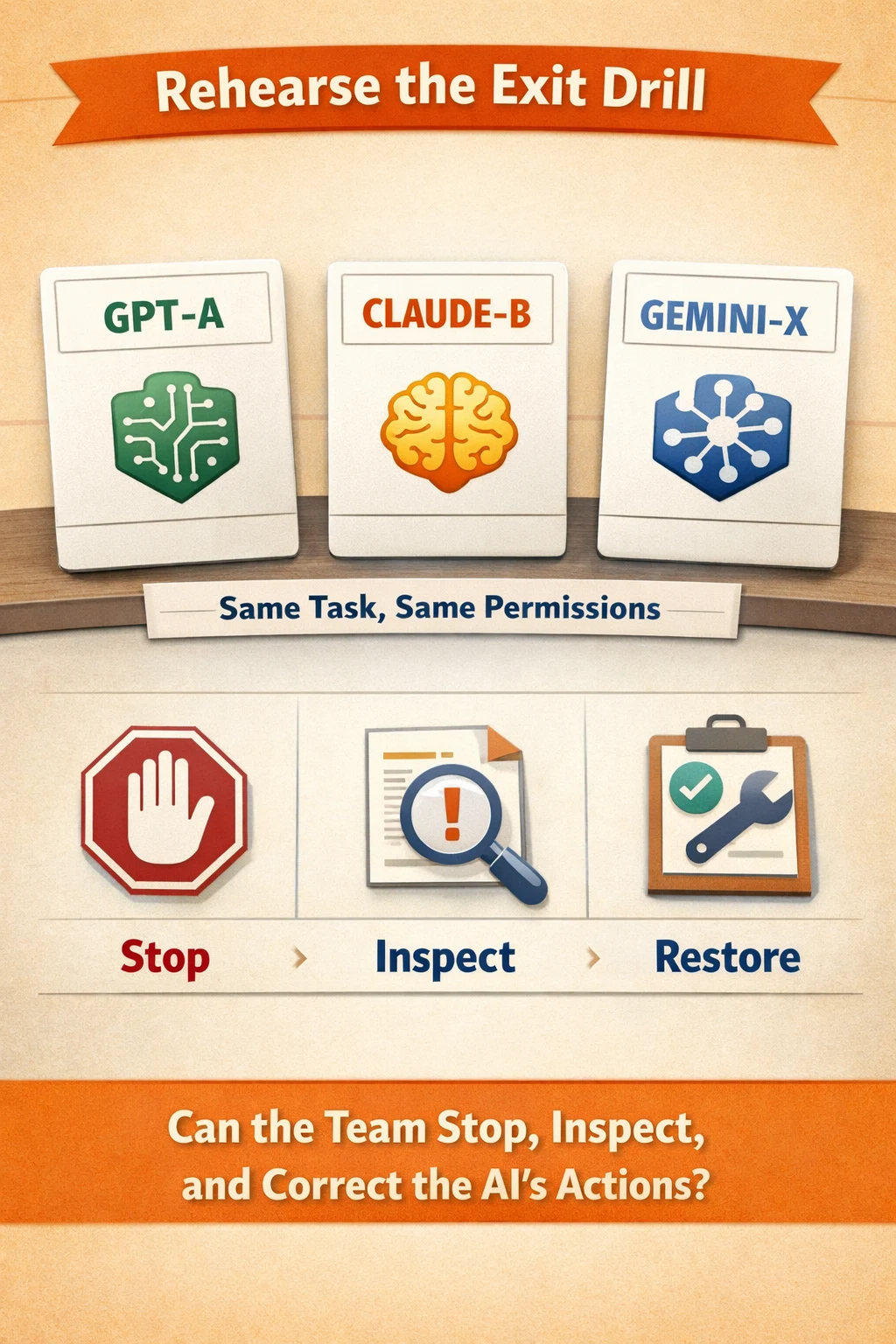
2 — Try a fictional exit drill. Give each candidate system the same task and permission boundary. First test a read-only step, then a human-approved action. At each stage, introduce a harmless change or failure. Record whether the team can stop the agent, identify what it already changed, and restore or correct the result. Track the recovery as well as task performance; don’t assume every system can reverse every action.
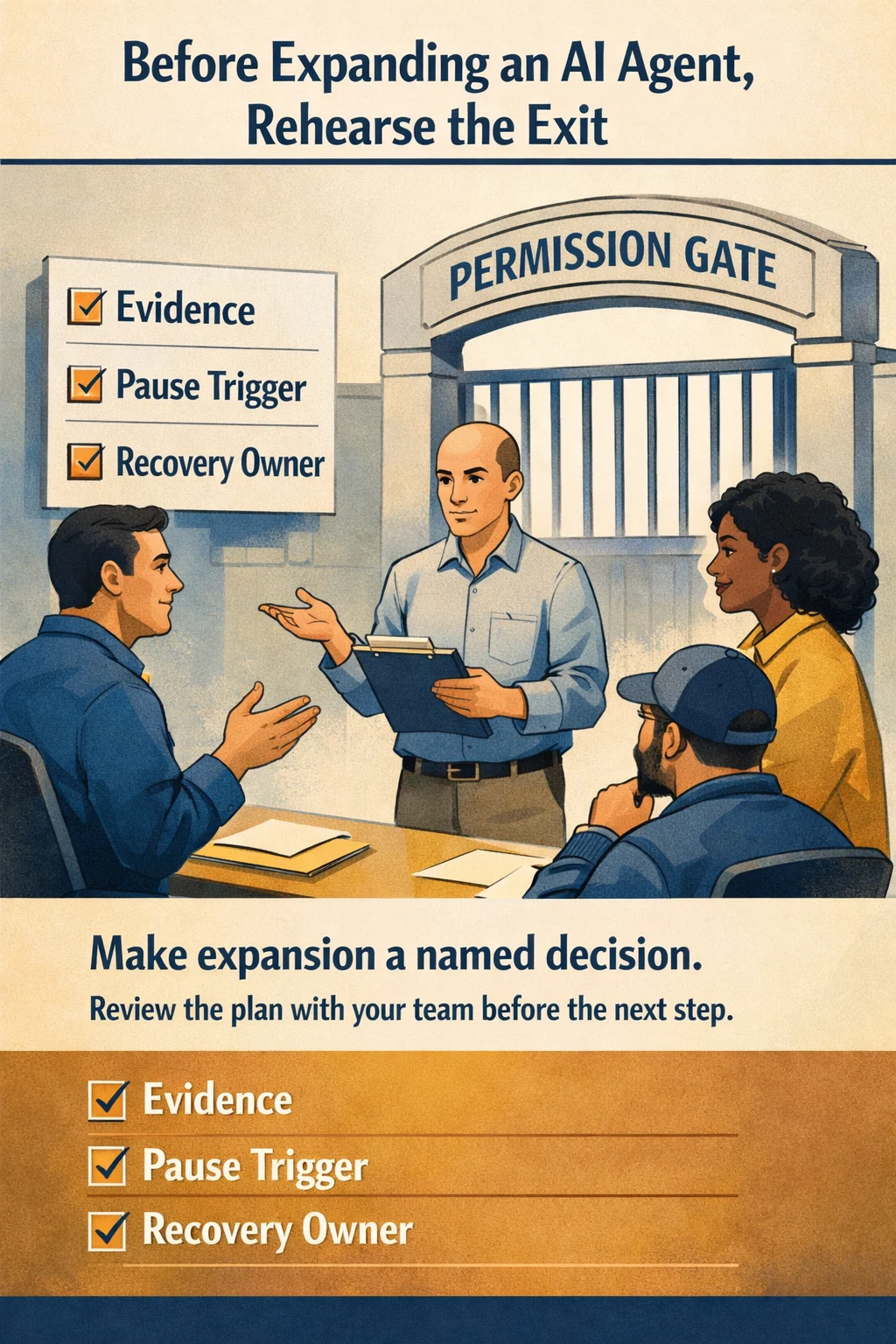
3 — Make expansion a named decision. Before granting the next permission, have the agreed decision owner explain the trade-off and consult the people affected. Record what evidence would justify proceeding, what would trigger a pause, and who owns any effects that cannot simply be undone. A promising demo is a reason to test—not, by itself, a reason to expand access.
Which recovery failure would make you defer the next permission step?