Measure the whole workflow, including the correction time
A fictional comparison can show why generation speed is not the same as saved effort. These numbers are invented for an exercise; they are not results from a real team.
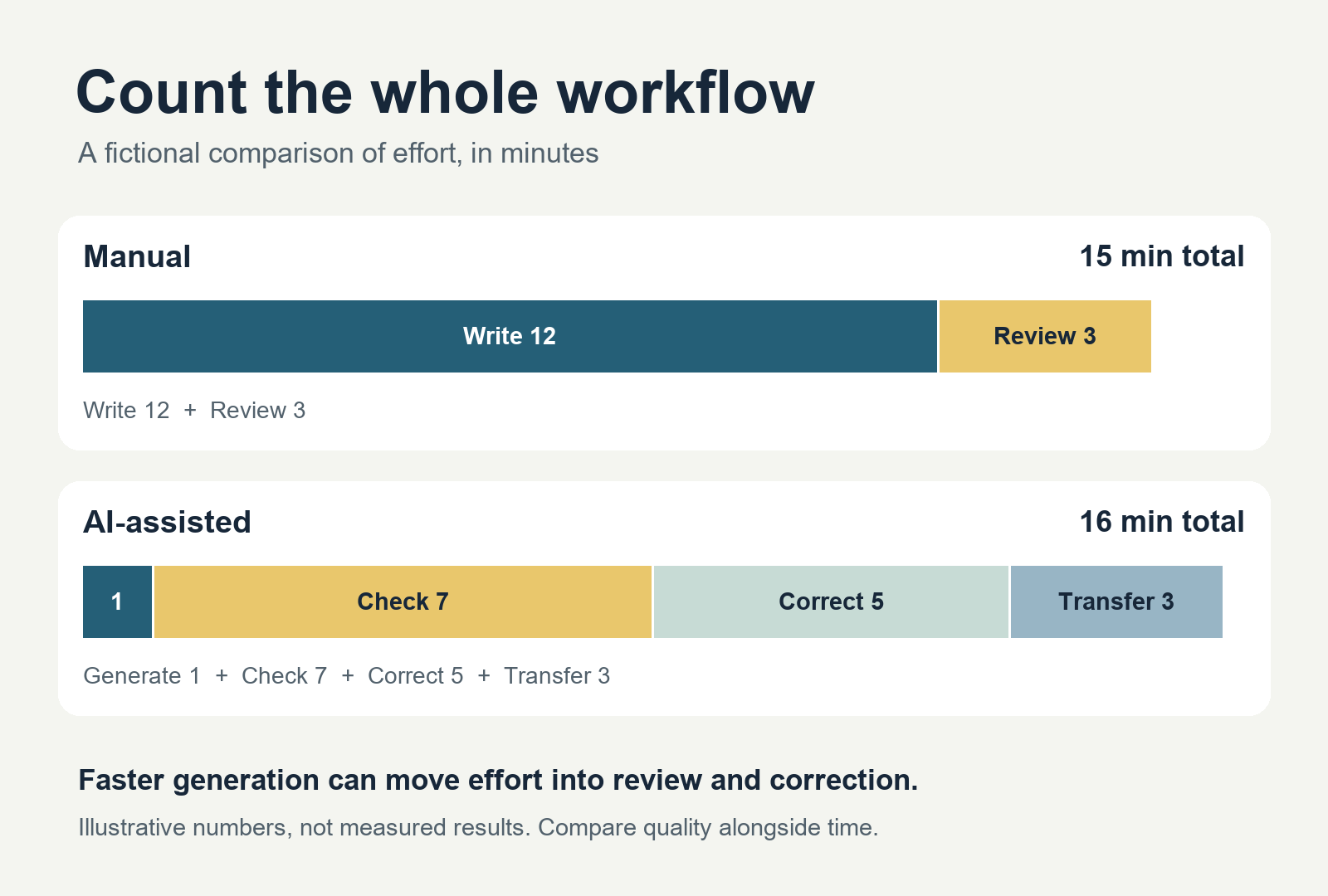
Manual draft: 12 minutes writing + 3 minutes reviewing = 15 minutes.
AI-assisted draft: 1 minute generating + 7 minutes checking + 5 minutes correcting + 3 minutes transferring it into the final format = 16 minutes.
The second draft arrives faster, but the complete workflow takes longer in this example. That does not settle which approach is better: perhaps quality differs, or the checking cost falls with a clearer brief. It tells us what to measure next.
For a small trial, use comparable fictional tasks and record generation, review, correction, and handoff time separately. Also record unsupported claims, missing requirements, and whether the reviewer can trace important statements to their source. Preserve disagreement between reviewers instead of hiding it inside one quality score.
Include setup and maintenance in the accounting if the decision is about ongoing use. Label one-time setup separately from repeated . Avoid generalizing from a single unusually easy example.
A useful outcome might be “the tool helps with the outline but not the final update,” rather than a forced choice between automate everything and abandon it.
What part of the would you expect a speed-only dashboard to miss?