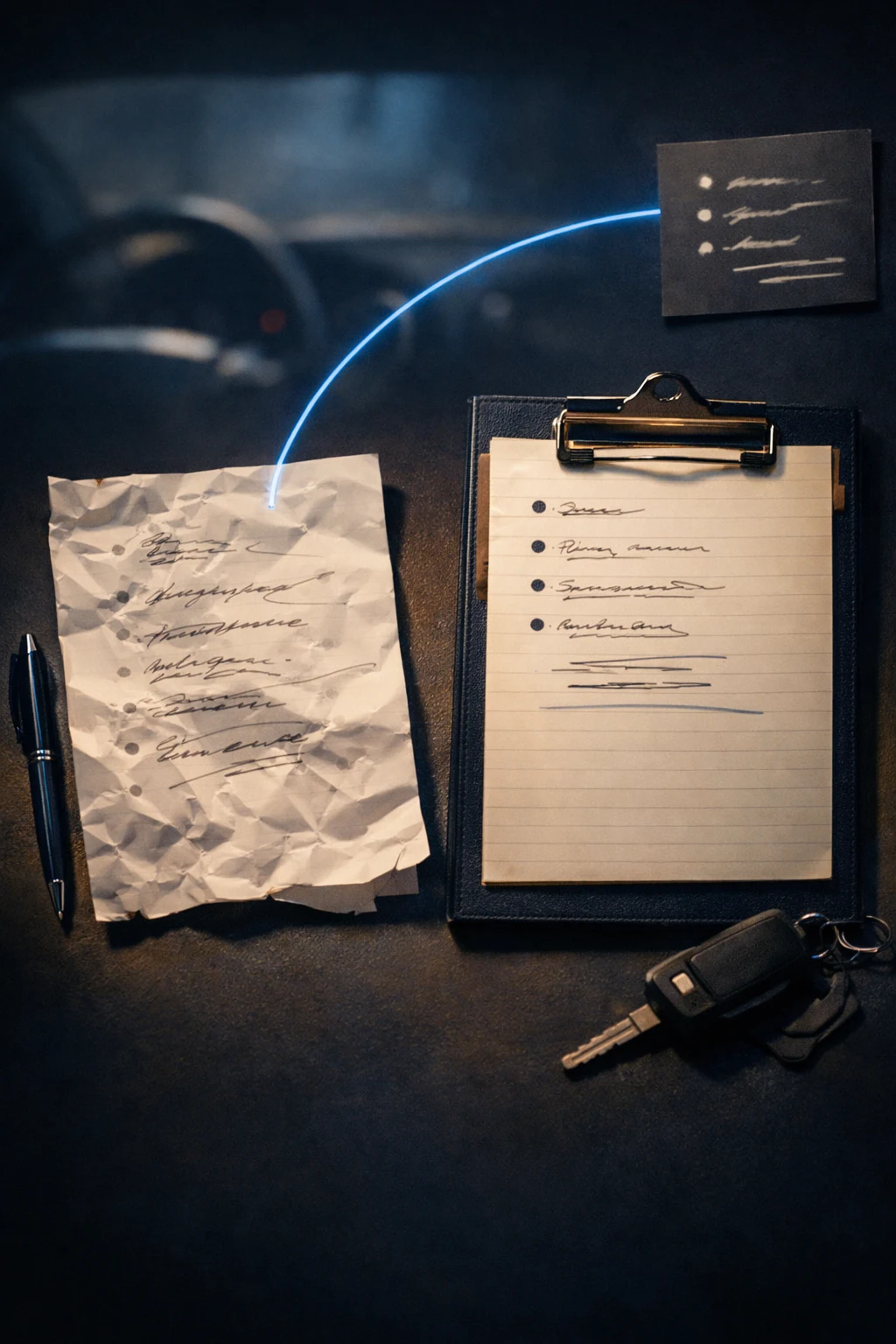
Document the Boundary, Not Just the Happy Path
A guide can explain the usual route and still leave a newcomer guessing where it stops.
Try pairing each important instruction with one plausible near-miss. For example: “A draft is ready for review when it names its audience and the action readers should take.” Then contrast it with: “Polished wording alone doesn’t make a draft ready.” Explain the distinction in a sentence.
This gives readers more than a model to copy; it shows which part of the rule matters. Keep the example clearly labeled as an example, and check that it reflects the team’s actual process before adding it to a guide.
A useful test: can someone explain why the near-miss falls short without guessing at an unstated rule? If not, the boundary—not the reader—may need a clearer sentence.