Set a Task-Level Floor Before Averaging AI Scores
Ahmad Turki Obaidat’s “A First AI Trial Should Test the Baseline—and the Way Back” emphasizes comparing an AI option with a simpler process while checking errors and recovery. Yasmin Muhamad Hamad’s “GPT, Claude or Gemini: the $10M bet is bigger than the model” calls for testing ecosystems on real tasks and considering operating costs and failure recovery.
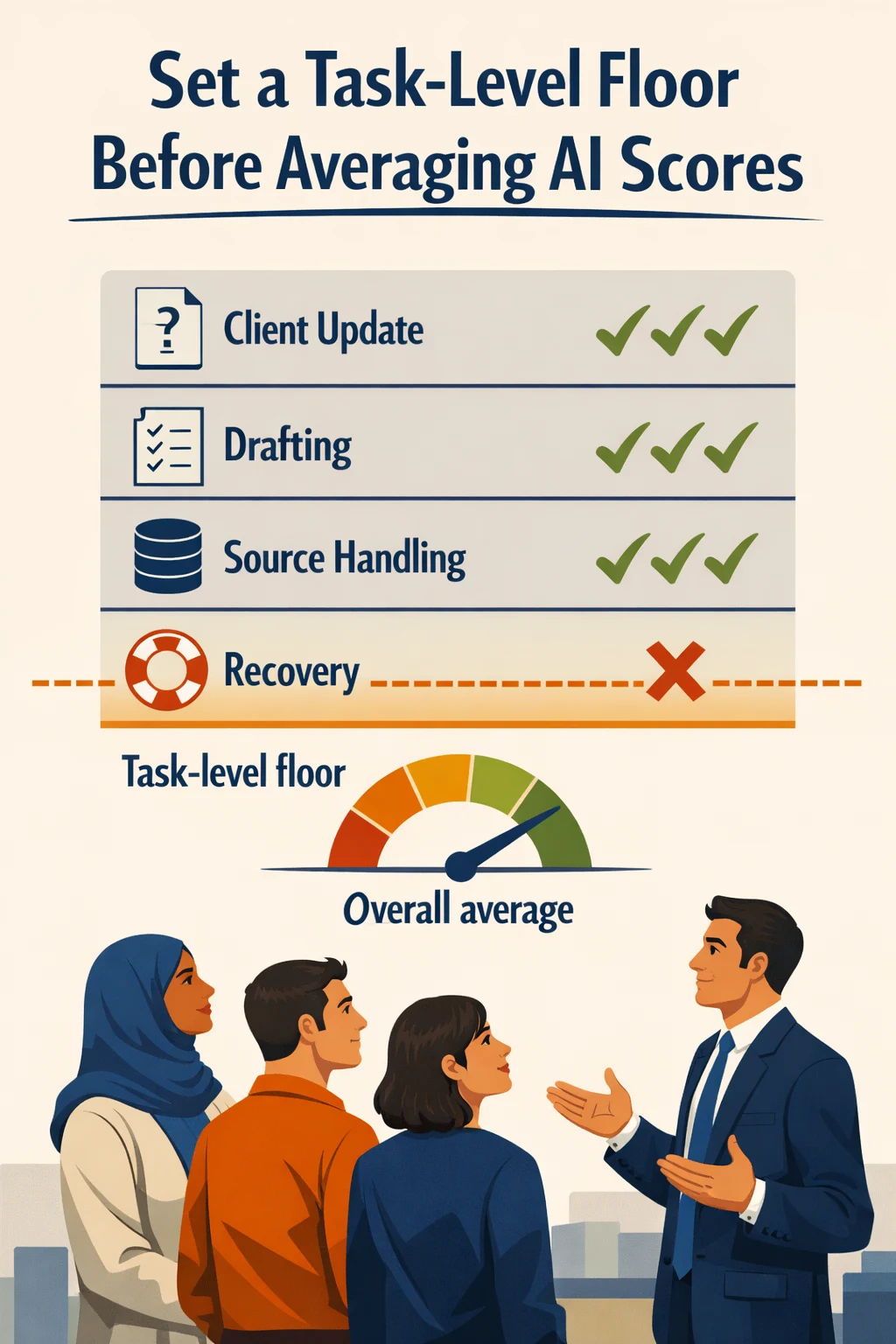
One useful addition: decide in advance whether any task needs a minimum acceptable result that an overall average cannot override. In a hypothetical evaluation, a team might set a floor for preserving uncertainty in a client update, then assess routine drafting, source handling, and recovery separately. A strong result on routine tasks would not erase a failure below that agreed floor.
The decision owner should explain why each floor matters and consult the people affected before testing. Record which results are hard requirements, which are trade-offs, and who can revise them. That makes the eventual choice easier to explain—and keeps a single blended score from quietly deciding what the team considers acceptable.
Which task in your evaluation would need a floor rather than an average?