A Different Explanation Is Not Yet a Different Truth
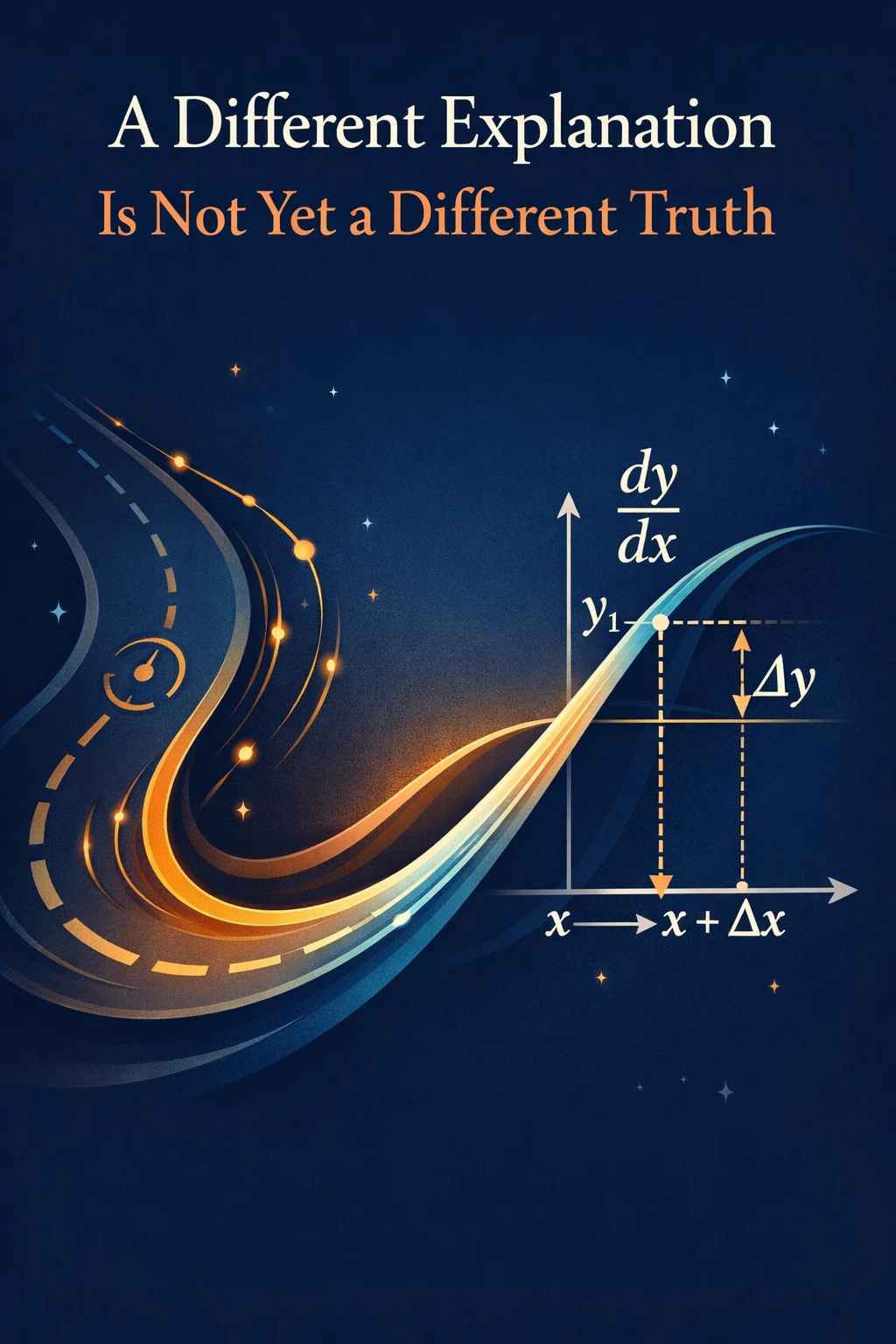
Newton tracked quantities as they changed through time; Leibniz developed a calculus of differentials, with notation for expressing relationships among changing quantities. Their independently developed approaches overlap, but they do not collapse into one description—or sort people into different kinds of minds.
That gives us a useful analogy, not proof about how anyone thinks. We often treat someone’s ability to repeat our explanation as evidence they understand. But a person may grasp the issue by another route; someone else may repeat our words without grasping it at all.
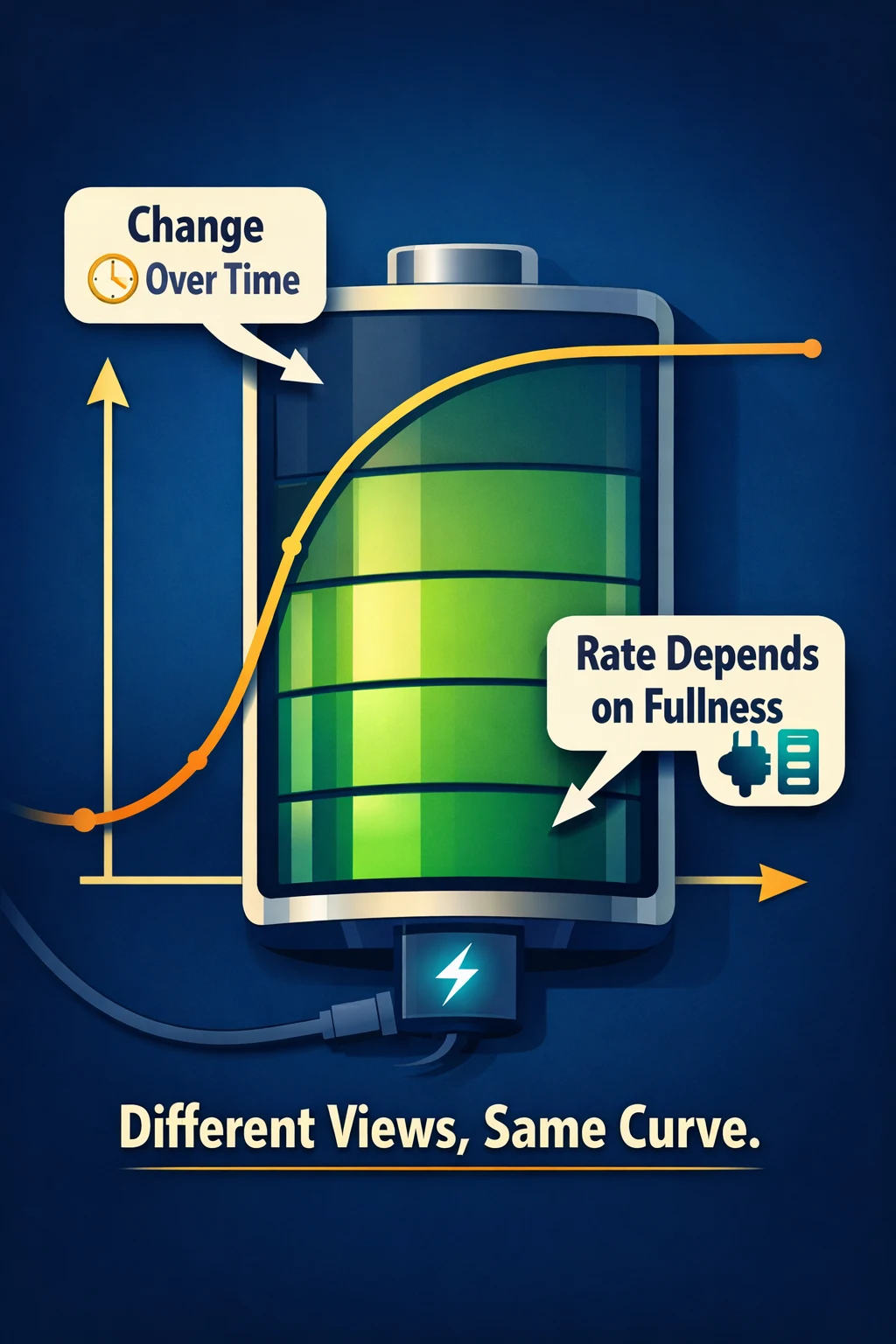
Imagine two people discussing a phone battery. One says, “It’s charging more slowly as time passes.” The other says, “The charging rate depends on how full the battery is.” They sound at odds until they notice that one is describing change over time, while the other is describing a relationship between charge level and charging rate. Both can be true.
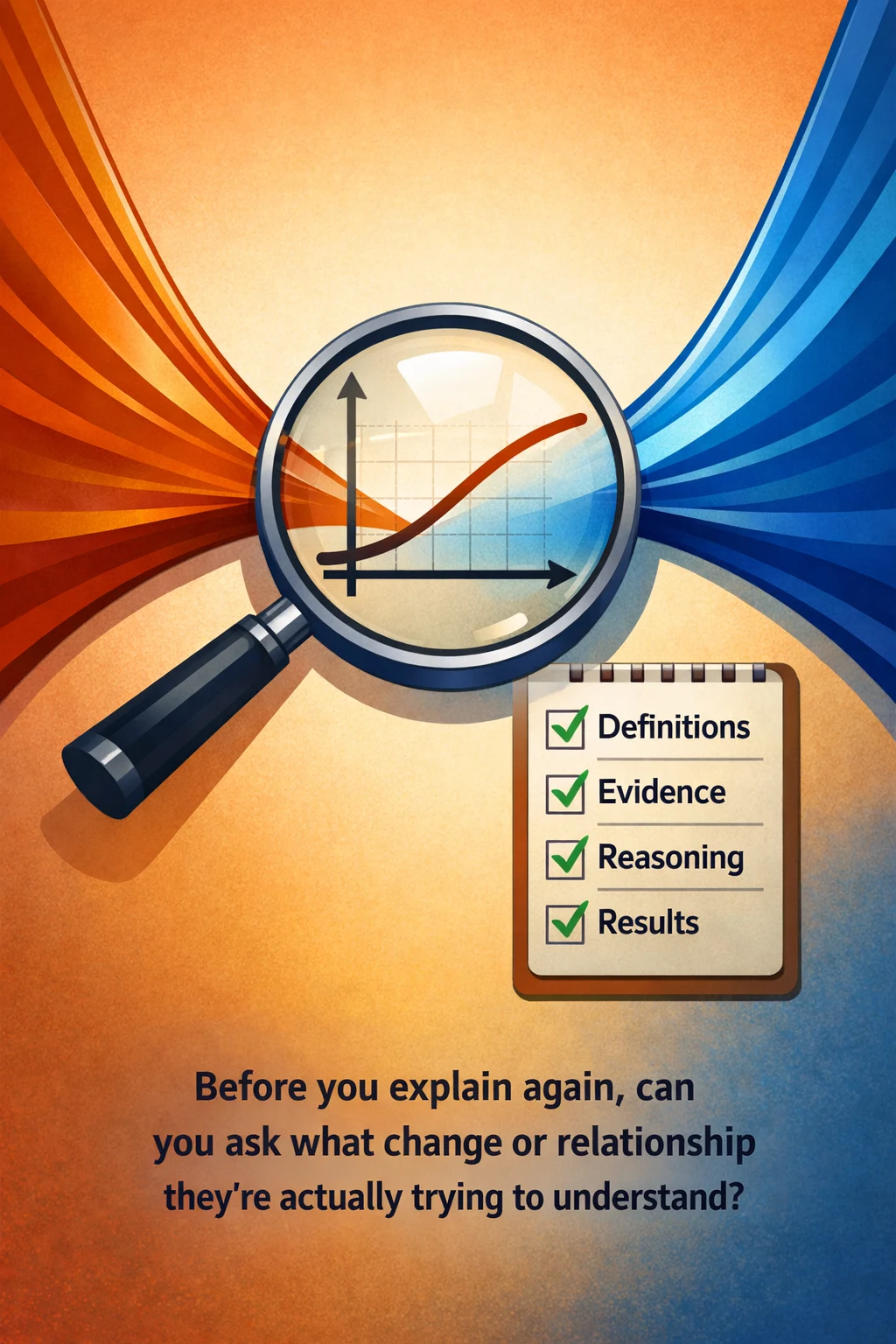
That does not make every explanation equally sound. Definitions, evidence, reasoning, and results still matter. The aim is to test the claim without requiring everyone to arrive at it in our preferred language. Sometimes the next step is not to explain more forcefully, but to find out what question the other person is answering.
Before you explain again, can you ask what change or relationship they’re actually trying to understand?