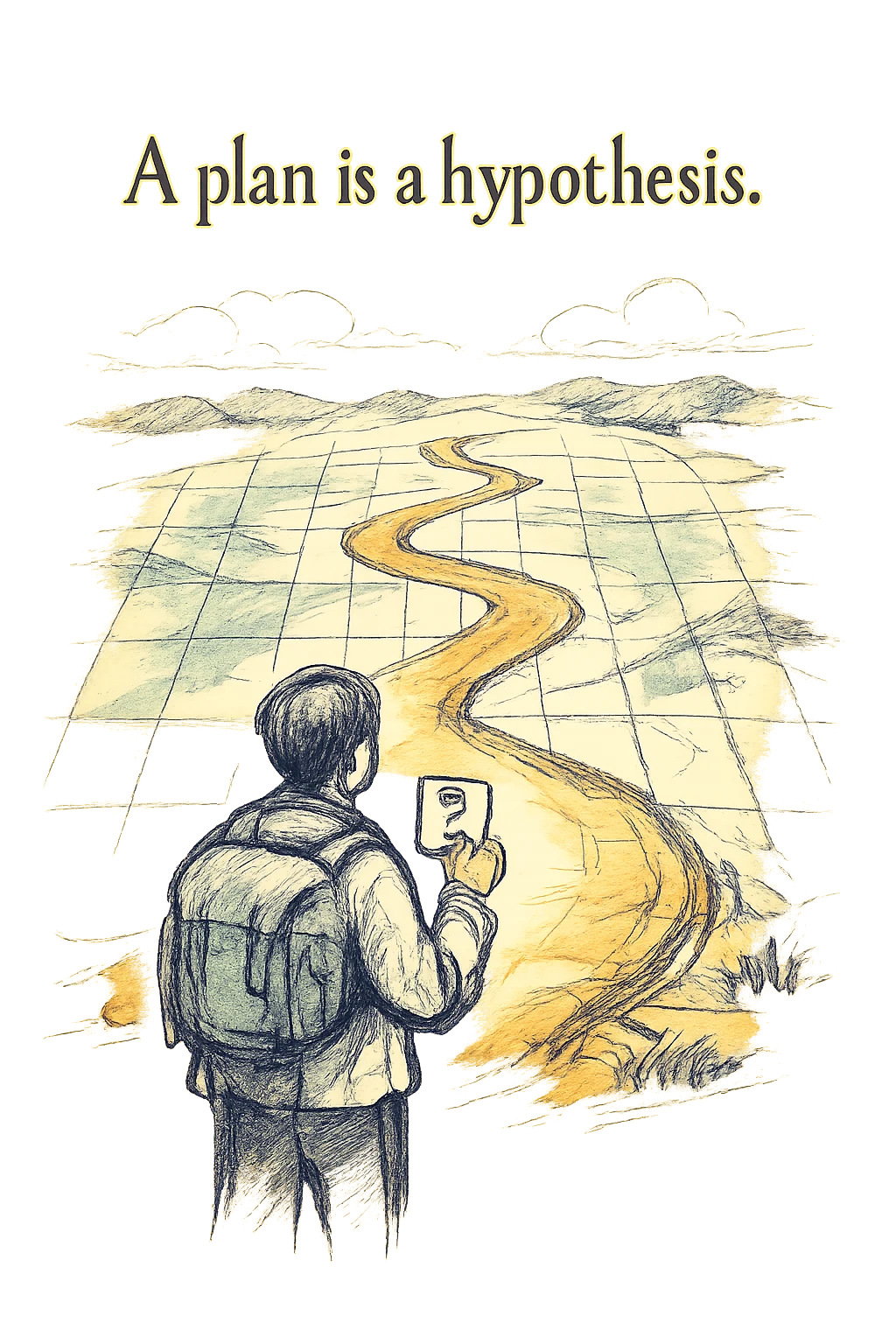
A plan is a hypothesis about what matters—and what fits
Farah Saleh Banihani’s post makes goal planning concrete: choose an outcome that matters, name a next step, and set a point to review it. Dania Ahmad Alkhrabsheh’s post offers a useful companion idea: conclusions depend on the conditions and framework behind them.
Together, they suggest treating a plan as a hypothesis—not a verdict. It rests on two questions: Does this direction reflect what matters to me? And do the conditions still make this next step sensible?
Before acting, write a short note: “I’m choosing this because . This step fits while .” Then decide what you’ll look for when you review it. Continue, adjust, or pause based on what you learn—not because changing course means the original choice was wrong.
A small step can test whether the plan fits, while leaving the direction yours to reconsider.
Sources: Farah Saleh Banihani, “Make the goal yours—and the next step clear” · Dania Ahmad Alkhrabsheh, “A Triangle with 270 Degrees—and the Assumptions Behind It”